

Loading process: from assumptions to proof per package
A warehouse extends beyond inventory management. For drivers, loading packages is equally critical. Errors often surface only when customers are waiting.
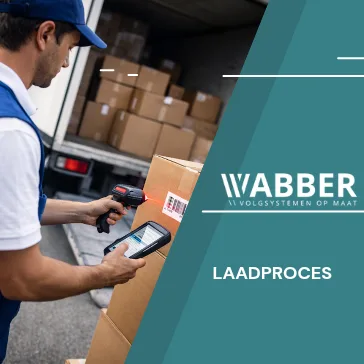
Where everything converges
The loading process is where everything converges. Packages must be correct, routes must be logical, and drivers must know exactly what they're carrying. Without a structured process, assumptions emerge, leading to post-hoc discussions, missing shipments, and unclear responsibility.
A systematized loading process
The loading process has been systematized. Drivers register via a check-in kiosk and receive a scanner before loading. Each package is registered as either loaded or written off. Write-offs are intentional and immediate: when a vehicle is full, a package is damaged, or incidents occur, documented in real-time, not from memory.
Deviations and incidents
When discrepancies arise, they're registered as incidents. Last-minute changes remain manageable. Removing a package, adding an extra shipment, or adjusting routes are processed immediately and remain fully traceable, keeping operations controllable even under planning pressure.
Automatic manifest after loading
After loading, a manifest is automatically generated. This overview shows what's in transit and what was deliberately left behind. Drivers, planners, and coordinators use identical information, eliminating misunderstandings and loose documentation. Reports reveal write-offs, incidents, and recurring bottlenecks, making structural problems visible rather than hidden in operations. Like inventory management, clarity during the process prevents subsequent complications.
Marketing Coordinator at Wabber B.V.