
RMA system: from noise to control over returns
Your RMA process feels manageable: until volume increases. Then noise arises: unclear statuses, missed handovers and customers who have to call themselves. That doesn't cost hours, it costs trust.
When RMA becomes a source of frustration
The frustrating thing is that this seems "good enough" for a long time. Until volume increases, more colleagues get involved, or tighter customer expectations emerge. Then RMA suddenly becomes a source of delays and frustration. In practice, an RMA isn't a simple registration. It's a chain of steps: submitting, receiving, assessing, deciding, shipping, informing, administrating. When those steps are spread across paper, Excel and email, three types of noise emerge almost automatically.
Three types of noise in the RMA process
Status noise: the customer asks "where does my case stand?" and internally the answer depends on who you ask. One person looks in Excel, another in the mailbox, and the warehouse worker works with a paper receipt. Handover noise: every manual step is a mini-handover. Someone types over data, someone creates a label, someone sends an update email. That costs time and causes errors. Agreement noise: during escalations or disputes, it's often not even about the product, but about "what exactly did we agree on?" When information is fragmented, you can't make it concrete.
An integrated RMA flow
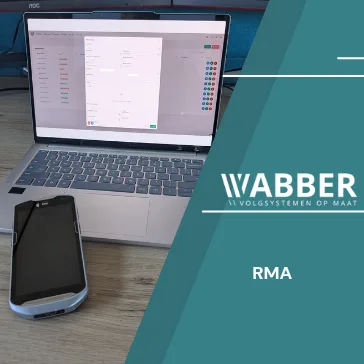
In an integrated RMA flow, you remove the manual work by designing the process as one whole. Not "another registration added", but a digital chain where every step flows logically and is automatically traceable. At our clients, RMA runs fully digital and streamlined. As soon as a product comes in, the dossier is immediately completed and everything stays linked to the same RMA. What are separate tasks in many organizations become automatic actions. The advantage isn't just speed. It's mainly that the process becomes predictable. You have one source of truth: one dossier with the complete history.
Scalable through digitalization
A manual RMA process often feels manageable as long as your volumes are low and one or two people "know everything". But growth makes it visible. More RMAs means more handovers, more exceptions, more questions, more pressure on support and logistics. A well-designed digital RMA process scales along. Not because people work harder, but because the system takes away the repetitive work and automatically places information in the right spot.
Marketing Coordinator at Wabber B.V.